

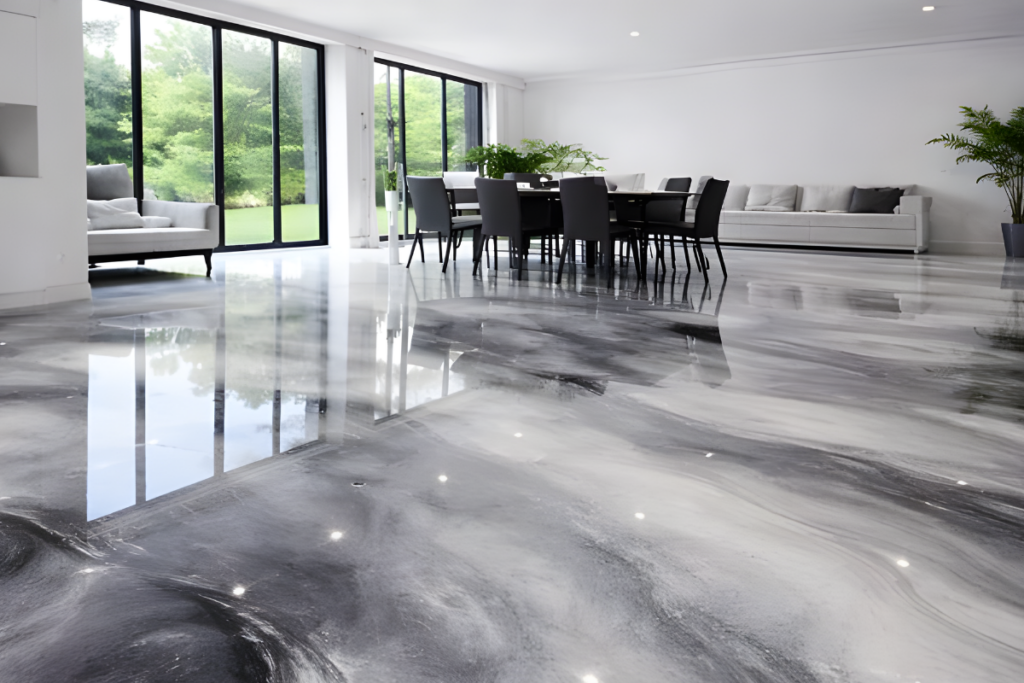
Epoxy resin flooring has evolved far beyond its industrial roots. As we move into 2026, epoxy resin floors are becoming a defining feature in modern homes, commercial interiors, and creative spaces across the South of England. From seamless finishes and muted tones to bold metallic effects and ultra-durable commercial systems, resin flooring is now chosen as much for its appearance as its performance.
At Master Epoxy Resin, we’re seeing a clear shift in how clients approach flooring — prioritising longevity, low maintenance, and design flexibility in equal measure.
This guide explores the key epoxy resin flooring trends shaping 2026, alongside inspiration for both residential and commercial environments.
Why Epoxy Resin Flooring Continues to Grow in Popularity
Epoxy resin floors offer a combination that few other surfaces can match:
- Seamless, modern finishes
- Exceptional durability
- Easy cleaning and maintenance
- Compatibility with underfloor heating
- Design flexibility across colours, textures, and effects
In regions such as London, Greater London, and the wider South of England, where contemporary architecture and refurbishment projects continue to grow, epoxy resin flooring fits perfectly with modern lifestyles and commercial demands.
2026 Epoxy Resin Floor Design Trends
1. Soft Neutrals & Natural Tones
While bold resin floors still have their place, 2026 is seeing a strong move towards softer, natural colour palettes. Think:
- Warm greys
- Stone-inspired tones
- Subtle beige and clay hues
- Muted earth colours
These finishes work particularly well in:
- Open-plan homes
- Kitchens and living spaces
- Retail environments
- Office interiors
They provide a clean, timeless base that doesn’t overpower a space, while still delivering the seamless look resin flooring is known for.
2. Metallic Epoxy with Controlled Movement
Metallic epoxy resin floors remain popular, but the trend in 2026 is controlled, refined movement rather than high-contrast swirls. Clients are opting for:
- Subtle marbling effects
- Tone-on-tone metallic finishes
- Softer transitions between shades
This approach adds depth and character without becoming visually overwhelming — ideal for showrooms, reception areas, and feature rooms in residential properties.
3. Matte & Satin Finishes Over High Gloss
Glossy resin floors dominated for years, but matte and satin finishes are becoming increasingly popular in 2026.
Why?
- Reduced glare
- Softer, more architectural appearance
- Better suited to minimalist interiors
- Practical for high-traffic spaces
These finishes are especially popular in:
- Residential homes
- Office environments
- Hospitality and leisure spaces
They still deliver the seamless resin look, but with a more understated feel.
4. Resin Floors as a Finished Surface – Not Just a Base
Historically, epoxy resin was often installed as a functional surface. In 2026, it’s increasingly treated as a final design feature.
Clients are choosing resin floors because:
- They replace tiles, vinyl, or concrete
- They remove grout lines and joints
- They offer a cleaner visual flow
This is particularly noticeable in:
- Modern kitchen renovations
- Loft-style apartments
- Commercial refurbishments
- Retail and hospitality spaces
Epoxy Resin Flooring for Homes in 2026
Residential demand for epoxy resin floors continues to grow across the South of England, particularly in:
- Garages
- Kitchens
- Utility rooms
- Basements
- Hallways and extensions
Homeowners are drawn to resin flooring because it offers:
- Long-term durability
- Easy maintenance
- Seamless integration with modern interiors
In 2026, resin floors are no longer seen as “industrial” — they’re viewed as a premium, practical design choice.
Commercial & Industrial Epoxy Resin Floors in 2026
Commercial spaces still rely on epoxy resin flooring for its performance benefits, but design is playing a bigger role.
Popular commercial applications include:
- Warehouses and industrial units
- Retail shops and showrooms
- Offices and shared workspaces
- Gyms and leisure facilities
- Automotive and workshop environments
In 2026, businesses are choosing resin floors that:
- Align with brand identity
- Improve safety and cleanliness
- Withstand heavy foot traffic and equipment
- Reduce long-term maintenance costs
The Importance of Preparation in 2026 Resin Flooring
As epoxy resin floors become more design-led, correct preparation is more important than ever. A visually impressive resin floor will only perform long-term if the substrate beneath it is correctly prepared.
This includes:
- Assessing existing concrete or screed
- Repairing cracks and defects
- Ensuring correct moisture levels
- Applying suitable primers and levelling systems
At Master Epoxy Resin, our preparation-led approach ensures that resin floors installed today continue to perform well into the future — an increasingly important consideration for both homeowners and commercial clients.
Is Epoxy Resin Flooring Right for Your Space in 2026?
Epoxy resin flooring is particularly well suited to:
- Modern interiors
- High-traffic environments
- Spaces where hygiene and easy cleaning matter
- Projects prioritising longevity and performance
Whether you’re planning a home renovation or a commercial refurbishment, resin flooring remains one of the most versatile flooring solutions available in 2026.
FAQs – Epoxy Resin Flooring in 2026
Are epoxy resin floors still on trend in 2026?
Yes. Epoxy resin flooring continues to grow in popularity in 2026, particularly for modern homes and commercial interiors where durability, seamless design, and low maintenance are key priorities.
Can epoxy resin floors be customised for modern interiors?
Absolutely. Epoxy resin floors can be customised with different colours, finishes, textures, and effects — from subtle matte tones to metallic feature floors.
Are epoxy resin floors suitable for homes in the South of England?
Yes. Epoxy resin floors are widely installed in homes across the South of England, offering a practical, modern flooring solution suited to both contemporary and traditional properties.

